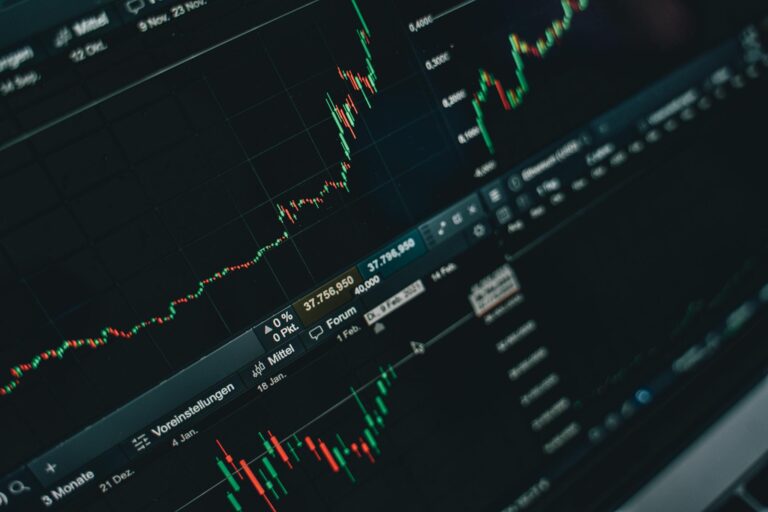
The Complete Guide to AI Investing in 2026
- AI investing uses machine learning in finance to analyze market data, automate portfolio management, and personalize investment strategies at scale — previously available only to institutional investors.
- The major categories of AI investing tools are: robo-advisors (automated portfolio management), AI stock pickers (predictive analytics), AI crypto bots (automated crypto trading), and AI financial planners (holistic goal-based planning).
- Retail investors now have access to AI tools that rival hedge fund capabilities — for as little as $0/month.
- AI investing is not a guaranteed path to wealth: it amplifies good strategy and disciplines away emotional errors, but it cannot eliminate market risk.
- The best approach: start with a robo-advisor for core portfolio management, then layer specialized AI tools as your knowledge and portfolio grow.
Artificial intelligence has transformed nearly every industry — and investing is no exception. In 2026, AI is no longer the exclusive domain of quantitative hedge funds and high-frequency trading desks. Retail investors now have access to the same category of machine learning tools that institutional players have used for a decade: AI-powered portfolio managers, predictive analytics engines, automated trading bots, and intelligent financial planners that adapt to your specific goals.
This guide covers everything you need to know about AI investing in 2026: what it is, how it works, which tools are worth your money, the strategies that deliver results, the risks you must understand, and exactly how to get started regardless of your current account size or experience level.
What Is AI Investing and How Does It Work?
AI investing refers to the use of machine learning algorithms, natural language processing, and predictive analytics to make investment decisions or assist investors in making them. The key distinction from traditional algorithmic trading is learning capability: AI systems improve their decision-making over time based on outcomes, market feedback, and new data — they don’t just execute pre-programmed rules.
At a practical level, AI investing systems process vast quantities of data no human could handle simultaneously: real-time price movements across thousands of securities, earnings reports, macroeconomic indicators, social media sentiment, SEC filings, patent applications, satellite imagery of parking lots (to gauge retail sales before reports), and even executive tone analysis on earnings calls. From this data, AI systems identify patterns, generate predictions, and — depending on the platform — either execute trades automatically or present actionable recommendations to human investors.
There are five primary mechanisms through which AI adds value for retail investors in 2026:
1. Automated rebalancing: AI continuously monitors your portfolio’s allocation against your targets and rebalances when drift exceeds thresholds — without you having to log in and manually trade.
2. Tax-loss harvesting: AI identifies unrealized losses in your portfolio and systematically harvests them to offset capital gains taxes — a strategy that can add 0.5–1.5% per year in after-tax returns.
3. Predictive analytics: Machine learning models trained on decades of market data identify high-probability trade setups, sector rotations, and individual security opportunities.
4. Behavioral coaching: AI systems track your trading behavior and actively prevent costly mistakes — panic-selling during corrections, performance-chasing into overvalued assets, or ignoring rebalancing opportunities.
5. Personalization: AI tailors your portfolio to your specific situation — tax bracket, time horizon, risk tolerance, existing holdings, income profile — at a granularity that generic index fund investing cannot match.
What Are the Main Types of AI Investing Tools?
Robo-Advisors: Automated Portfolio Management
Robo-advisors are the most accessible form of AI investing for retail investors. They build diversified ETF portfolios based on your risk tolerance and goals, then manage them automatically. The leading platforms — Betterment, Wealthfront, Vanguard Digital Advisor, and Schwab Intelligent Portfolios — charge 0%–0.25% annually, making them dramatically cheaper than traditional financial advisors at 1%+.
For a deep comparison of the two market leaders, read our guide: Wealthfront vs Betterment 2026: Which AI Robo-Advisor Actually Wins?
For a broader ranking of the top robo-advisors, see: Top 10 Best Robo-Advisors in 2026: Automated Investing for Every Budget
AI Stock Picking and Market Prediction
AI stock prediction systems use machine learning to analyze historical price patterns, fundamental data, and alternative data sources to generate buy/sell signals. These range from retail-accessible platforms (Trade Ideas, Tickeron, TrendSpider) to institutional-grade systems used by hedge funds. Important caveat: AI stock prediction is probabilistic, not deterministic. The best systems achieve 60–70% directional accuracy — meaningful over hundreds of trades, but not a guarantee on any individual one.
For more on how accurate AI stock prediction actually is, see: AI Stock Market Prediction: How Accurate Is It Really?
AI Investing Apps for Retail Investors
A new category of AI-native investing apps has emerged that combines brokerage functionality with intelligent portfolio analysis. Platforms like Public, Magnifi, and Composer allow retail investors to build, test, and deploy AI-assisted investment strategies with minimal technical knowledge.
For a ranked list of the best options in this category, see: Top 10 Best AI Investing Apps in 2026 (Ranked & Reviewed)
And for apps that combine investing with broader financial management: Best AI Apps for Personal Finance in 2026 (Tested & Ranked)
AI AI wealth management Platforms
For investors with larger portfolios ($100,000+), dedicated AI wealth management platforms offer more sophisticated personalization, tax optimization, and financial planning integration. Platforms like Personal Capital AI, Ellevest, and SigFig provide institutional-quality management at a fraction of traditional wealth management costs.
For a data-driven comparison, read: Best AI Wealth Management Platforms in 2026: A Data-Driven Comparison
AI Crypto Trading
Cryptocurrency markets — open 24/7, highly volatile, and data-rich — are a natural fit for AI trading. Platforms like Cryptohopper, 3Commas, and Pionex deploy grid trading, DCA, and arbitrage strategies automatically across exchanges. Crypto AI trading carries significantly higher risk than traditional market AI tools.
For a complete guide to crypto bot trading, see: AI Crypto Trading Bots in 2026: Do They Actually Make Money?
AI Day Trading Software
For active traders who want to maintain control while leveraging AI pattern recognition and signal generation, tools like Trade Ideas and TrendSpider provide powerful scanning and analysis capabilities. These require more active involvement than robo-advisors but can offer higher upside for skilled traders.
See our full breakdown: Best AI Day Trading Software in 2026 (Ranked & Tested)
What Are the Best AI Investing Strategies for 2026?
Core-Satellite Strategy: Use a robo-advisor for your core portfolio (70–80% of assets) invested in diversified ETFs, then allocate 20–30% to more active AI-assisted strategies (individual stocks, sector tilts, or crypto). This approach captures the tax efficiency and low cost of passive investing while leaving room for higher-return opportunities.
Factor Investing with AI: AI-powered factor investing tilts portfolios toward securities with historically higher returns — value stocks, small caps, momentum stocks, quality companies with strong balance sheets. Platforms like Wealthfront’s Smart Beta and Alpha Architect’s ETFs make factor investing accessible without stock picking.
Dollar-Cost Averaging with AI Optimization: Regular, scheduled contributions to a diversified portfolio — AI-enhanced through tax-optimal timing, asset-location optimization (placing the right investments in the right account types), and automated dividend reinvestment.
Retirement-Focused AI Planning: AI AI retirement planning tools tools like Betterment’s RetireGuide and Fidelity’s Planning & Guidance Center use Monte Carlo simulations to model the probability of achieving your retirement goals under thousands of market scenarios, adjusting recommendations dynamically as your situation changes.
For AI tools specifically focused on retirement, see: AI Tools for Retirement Planning: Do They Actually Work?
What Are the Risks of AI Investing?
Model Risk: AI models are trained on historical data. When markets behave in ways outside the training distribution — a global pandemic, a banking crisis, a new regulatory regime — models may produce unreliable recommendations. No AI investing system is immune to black-swan events.
Overconfidence Risk: AI tools present recommendations with precision that can feel authoritative. A 73% confidence rating sounds scientific. But in markets that are fundamentally uncertain, precise-sounding outputs can encourage overconfidence and excessive position sizing. Always use position limits regardless of AI signal strength.
Automation Risk: Fully automated strategies can amplify losses if they continue executing a failing strategy without human override. Always set maximum drawdown limits and monitor automated strategies regularly.
Data Quality Risk: AI is only as good as its training data. Systems trained on biased or incomplete datasets will produce biased outputs. This is particularly relevant for AI systems using alternative data sources that may have collection biases.
For a balanced perspective on AI vs. traditional financial planning, see: AI vs Traditional Financial Planning: The Complete 2026 Guide
And for the broader question of AI advisor vs. human: AI Financial Advisor vs Human: Which One Should You Trust With Your Money?
How to Get Started with AI Investing in 2026
Step 1: Define your goals. Are you investing for retirement in 30 years, a home purchase in 5 years, or wealth building with no specific timeline? Your goal determines your time horizon, which determines your appropriate risk tolerance, which determines every subsequent decision. AI financial planning tools like Betterment’s goals dashboard or Wealthfront’s Path tool can help you quantify and model specific goals.
Step 2: Choose your starting platform. For most investors beginning their AI investing journey, a robo-advisor is the right first platform. Open an account with Betterment ($0 minimum) or Wealthfront ($500 minimum), complete their risk questionnaire, fund your account, and let the AI manage allocation and rebalancing. This single step — moving from a savings account to an AI-managed diversified portfolio — is the highest-value decision most investors can make.
Step 3: Automate contributions. Set up automatic monthly contributions regardless of market conditions. This implements dollar-cost averaging by default and removes the emotional decision of “is now a good time to invest?”
Step 4: Layer specialized tools as you grow. As your portfolio exceeds $25,000–$50,000, explore additional AI tools: a wealth management platform for more sophisticated tax optimization, an AI analysis tool for individual stock research, or a crypto allocation managed by an AI bot if you want exposure to digital assets.
Step 5: Review and adjust annually. Even with AI automation, an annual portfolio review is valuable. Ensure your risk tolerance still matches your allocation, that your goal timelines are accurate, and that you’re taking advantage of all available tax optimization features.
For practical guidance on starting with limited capital, see: Top 10 Ways to Make Money with AI in 2026
AI investing in 2026 is no longer a niche technology for tech-savvy investors — it’s mainstream, accessible, and genuinely effective for retail investors at every wealth level. The tools exist to automate nearly every aspect of portfolio management better than most humans can do manually: diversification, rebalancing, tax optimization, behavioral correction, and goal planning. The most important step is simply starting: open a robo-advisor account, fund it consistently, and let compound interest and AI-driven optimization work over time. Every year you delay is a year of compounding you’ll never recover.
Frequently Asked Questions
How much money do I need to start AI investing?
You can start AI investing with $0 using platforms like Betterment (no minimum), SoFi Automated Investing (no minimum), or Schwab Intelligent Portfolios ($5,000 minimum but no advisory fee). Most robo-advisors become meaningfully effective from $1,000+ where proper diversification across multiple ETFs is achievable. More advanced features like Direct Indexing (holding individual stocks instead of ETFs for superior tax harvesting) require $100,000+. The bottom line: there’s no minimum to start, and starting with any amount is infinitely better than not starting.
Is AI investing safe for retirement accounts?
AI investing is widely used and fully appropriate for retirement accounts (IRAs, 401(k)s, Roth IRAs). Robo-advisors are among the most tax-efficient vehicles for retirement savings because their automatic rebalancing and tax-loss harvesting features are specifically valuable in taxable accounts, while their low-cost ETF portfolios compound effectively inside tax-advantaged retirement accounts. Betterment, Wealthfront, and most major robo-advisors support IRA accounts directly.
Can AI investing beat the stock market?
For most retail investors, the relevant question is not “can AI beat the market?” but “can AI help me achieve my financial goals with lower cost and less stress than alternatives?” Most robo-advisors aim to match market returns (not beat them) through low-cost index investing — a strategy that outperforms 85%+ of actively managed funds over 15-year periods. Specialized AI tools (AI stock pickers, day trading software) do attempt to beat the market, with varying success. The evidence base for passive AI-managed portfolios is extremely strong; the evidence for active AI stock picking is more mixed.